
Choosing the right Piston Air Compressor depends largely on how much compressed air a workshop or industrial facility needs, how frequently the equipment runs, and how long each operating cycle lasts.
Piston compressors remain widely used in workshops, maintenance facilities, fabrication units, garages, and industrial environments where compressed air is required for intermittent or moderate-duty applications.
For businesses in Nagpur, Maharashtra, selecting the right configuration starts with understanding the actual workload rather than choosing a compressor only by motor horsepower.
How a Piston Air Compressor Works
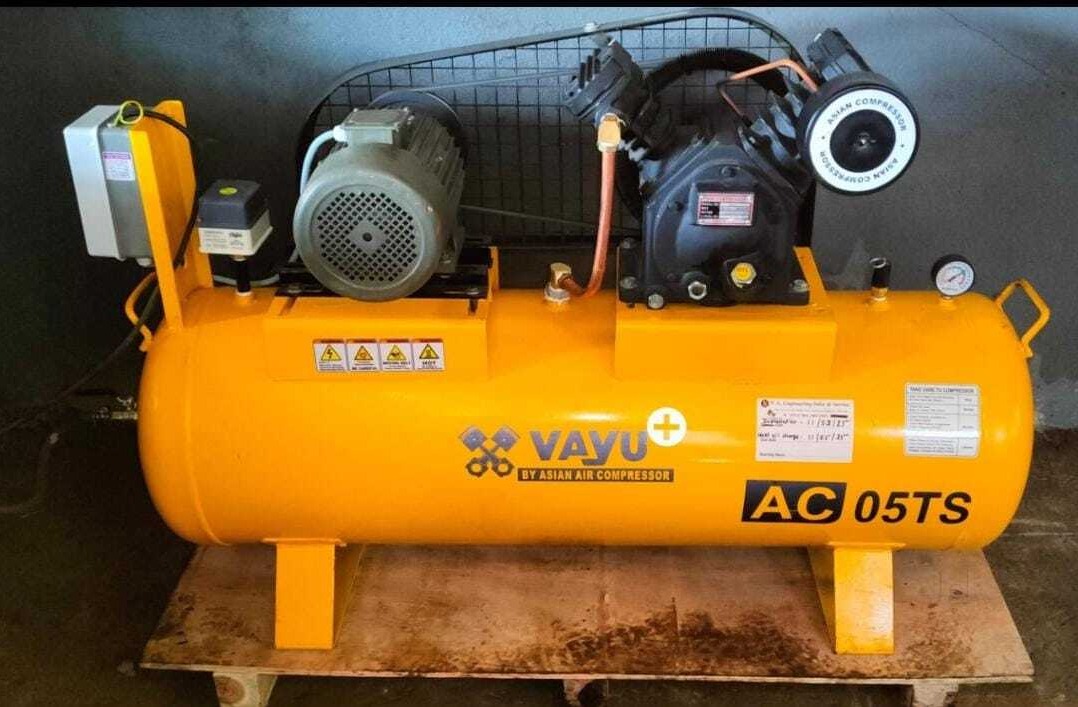
A piston compressor uses one or more reciprocating pistons moving inside cylinders to compress air.
As the piston moves, air is drawn into the cylinder, compressed, and discharged into a receiver or downstream air system.
This proven mechanical design makes piston compressors suitable for many general industrial and workshop applications.
Workloads Suitable for Piston Compressors
Piston compressors are commonly considered where compressed-air demand occurs in intervals rather than continuously throughout the day.
Typical applications include:
- Pneumatic hand tools
- Maintenance activities
- Small fabrication work
- Tyre servicing
- Air cleaning
- Workshop equipment
- Light assembly operations
- Intermittent machinery
The key factor is the operating pattern.
A compressor used for short bursts of pneumatic-tool operation has a very different duty requirement from a compressor supporting production machinery across multiple shifts.
Calculate the Required Airflow
Airflow is one of the most important specifications when selecting any compressor.
Check the compressed-air requirement of each connected tool or machine and determine which equipment may operate at the same time.
If several pneumatic tools are used simultaneously, the compressor should be capable of supplying their combined air demand with an appropriate operating margin.
Choosing insufficient capacity may result in repeated pressure drops and longer compressor running times.
Confirm the Working Pressure
Every pneumatic tool or machine has an operating pressure requirement.
The compressor must be able to maintain the required pressure at the point of use after accounting for pressure losses through:
- Piping
- Hoses
- Filters
- Regulators
- Fittings
- Air dryers
Increasing compressor pressure simply to compensate for poor piping or blocked filters can increase energy consumption unnecessarily.
Consider the Duty Cycle
Duty cycle indicates how long the compressor can operate within a given period according to its design.
This becomes particularly important when comparing piston compressors for different workloads.
A workshop using compressed air occasionally may have modest duty requirements.
A production unit requiring air repeatedly throughout the shift may need a heavier-duty compressor or another compressor technology designed for longer continuous operation.
Receiver Size Also Matters
Many piston compressors are installed with air receivers.
The receiver stores compressed air and helps manage short periods of higher demand.
A suitable receiver can also help reduce frequent starting and stopping.
However, a large tank does not replace adequate compressor capacity. Once stored air is consumed, the compressor still needs sufficient output to replenish the system.
Plan for Heat and Ventilation
Compressing air generates heat.
The compressor should therefore be installed where cooling airflow can circulate freely around the equipment.
This is particularly relevant for industrial facilities in Nagpur, where high seasonal ambient temperatures can increase compressor-room heat.
Blocked ventilation, dirty cooling surfaces, and cramped installation spaces can contribute to overheating.
Review Maintenance Requirements
Routine maintenance supports reliable compressor operation.
Depending on the machine design, maintenance may involve:
- Checking lubricant levels
- Cleaning intake filters
- Inspecting belts
- Draining condensate
- Checking valves
- Inspecting electrical connections
- Cleaning cooling surfaces
- Monitoring abnormal vibration or noise
Maintenance access should therefore be considered before finalising the installation location.
Match the Compressor to Future Demand
Industrial businesses often expand after the original compressor installation.
Additional pneumatic machines or longer production shifts can increase compressed-air demand.
A small capacity margin can therefore be useful when expansion is reasonably expected, although excessive oversizing should also be avoided.
Advik Enterprises supplies piston compressor solutions and other industrial air compressor equipment for businesses in Nagpur. Buyers can compare capacity according to required airflow, working pressure, operating schedule, and application type.
A Piston Air Compressor can be an effective solution when the workload matches its intended operating characteristics.
The most reliable selection comes from evaluating airflow, pressure, duty cycle, receiver capacity, installation conditions, and expected future demand together rather than relying on a single specification.